Osso Buco
Tender veal shanks braise with tomatoes, wine and aromatics, then finish with zesty gremolada for a deeply savory, elegant dinner.
Prep 45 min · Cook 3 hr 25 min · Total 4 hr 10 min · Makes 6 servings
Ingredients
- 6 pieces osso buco
- Kosher salt and freshly ground black pepper
- 1 cup all-purpose flour
- 1/4 cup extra-virgin olive oil, plus more if needed
- 1 tablespoon unsalted butter
- 1 large yellow onion, minced
- 2 medium carrots, minced
- 1 celery rib, minced
- 3 medium cloves garlic, minced
- 1 cup dry white wine
- 3/4 cup homemade or store-bought low-sodium chicken stock
- 1 can peeled whole tomatoes, seeded and drained, tomato flesh crushed by hand
- 3 fresh thyme sprigs
- 1 bay leaf
- For the gremolada:
- 2 tablespoons finely minced flat-leaf parsley leaves and tender stems
- Zest of 1 lemon, finely minced
- 6 medium cloves garlic, finely minced
Directions
- Heat the oven to 325 degrees F (163 degrees C). Sprinkle the veal shanks generously on all sides with salt and pepper. If you have butcher's twine, tie a piece snugly around the outside edge of each shank to help it stay compact as it cooks; it is helpful, but not required.
- Put the flour in a shallow bowl. Warm the olive oil in a large Dutch oven over medium-high heat until it shimmers. In batches, coat the shanks lightly with flour, tap off the extra, and place them in the pot without crowding. Brown the shanks, turning as needed, until both sides have a light crust, about 4 minutes per side; reduce the heat whenever the flour looks like it may scorch. Move the browned pieces to a platter, then continue with the remaining shanks, adding more oil to the Dutch oven if the pan looks dry.
- Add the butter to the Dutch oven, then stir in the onion, carrot, celery, and garlic. Cook over medium-high heat, stirring often, until the vegetables soften and begin to take on a pale golden color, about 6 minutes.
- Pour in the wine, stock, and tomatoes, then return the veal shanks and any juices from the platter to the Dutch oven. Nestle the shanks into the pot in the most even layer you can manage, with a bit of overlap if needed. The liquid should come almost, but not completely, over the shanks; add stock or water if you need more liquid to reach that level. Add the thyme and bay leaf, then bring everything to a simmer.
- Make a parchment paper lid. Lay it over the shanks, then move the Dutch oven to the oven. Cook for 2 hours.
- Meanwhile, make the gremolada by stirring the parsley, lemon zest, and garlic together in a small bowl. Set it aside.
- Take off the parchment paper lid and keep cooking until the shanks are tender enough to pull apart with a fork, about 1 hour longer. If the pot starts to look dry, add stock or water as needed so the braise stays moist; some reduction is welcome, but the bottom should never be dry. You can shift the shanks as they cook so pieces sitting under the liquid get some exposure to the oven air. During the last 20 minutes, stir in 1 to 2 teaspoons (5 to 10ml) of the gremolada, using the smaller or larger amount depending on how pronounced you want the lemon and garlic to be.
- Gently move the shanks to a platter. A spatula and tongs together make this easier if the meat is very tender. Skim off excess fat from the surface of the braising liquid with a spoon. The juices should be thick and saucy; loosen them with water or stock if needed, or simmer on the stovetop to reduce them further. Remove and discard the thyme and bay leaf, then taste and add salt and pepper if needed.
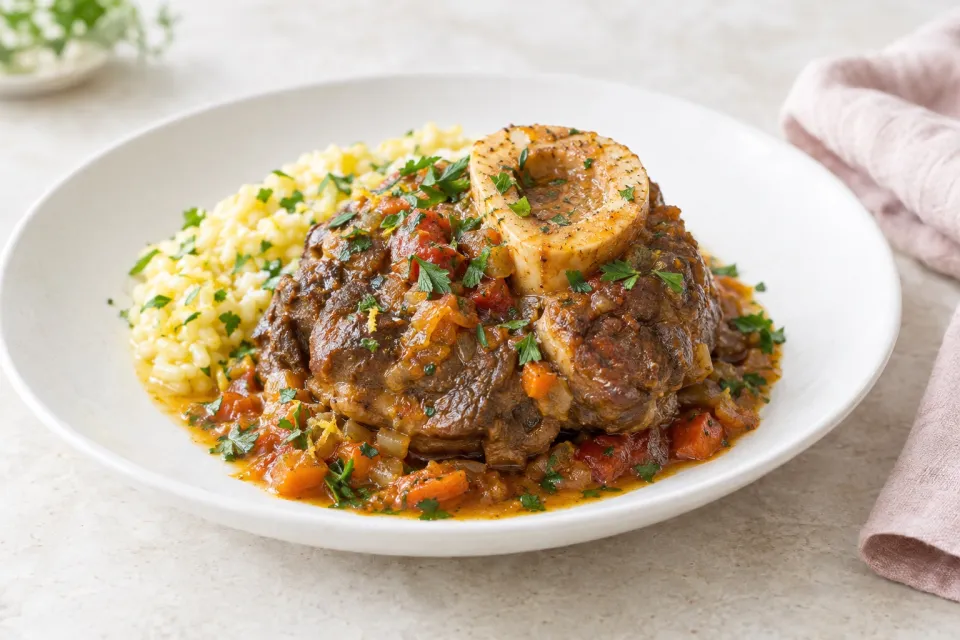
- If you tied the shanks, remove the twine. Plate the shanks, spoon the braising sauce over the top, and serve the remaining gremolada at the table so each person can add it as desired. Offer small spoons for the marrow in the bones. Osso buco is traditionally served with Risotto alla Milanese.